



The impact metrics proposed by Antara have the primary purpose of ensuring the continuous...
“Food, and the way we eat, has changed more in the last 20 years than in the previous 20 centuries.” The phrase may sound rather sweeping, but it captures the moment the food industry is living through today remarkably well: a sector undergoing simultaneous shifts in technology, regulation, resources, health expectations and consumer behaviour.
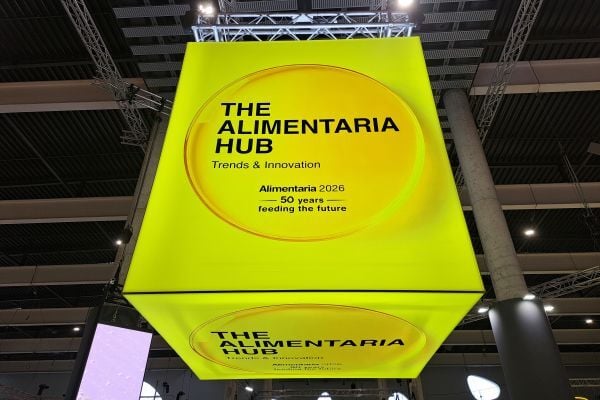
That is how Ignasi Papell of Eurecat opened his presentation at Alimentaria 2026. I am grateful to him for sharing his deck with me and for giving me permission to use it as the starting point for this article.
Why food macrotrends matter now
A changing sector: the macrotrends reshaping food
What matters to a business is not simply knowing these macrotrends exist. What matters is turning them into decisions. That is precisely where many organisations fall short. They spot a trend at a trade fair, discuss it in a meeting, perhaps carry out a one-off search… and within a few weeks they are back to dealing with day-to-day urgencies. The trend gets filed away as an “interesting topic”, but it never becomes a criterion for prioritising innovation, redesigning the portfolio, monitoring risks or exploring partnerships.
That is exactly the point worth dwelling on: a macrotrend is not a fad. It is a vector of change which, if it takes hold, can alter demand, the production model, the regulatory framework or the competitive structure of a category. That is why identifying it is not enough. You need to ask what it means for your strategy, what it demands of your innovation system, and which signals you should start monitoring from today.
The picture drawn by Ignasi Papell provides a fairly clear map of how the sector is being reshaped: AI applied to production, precision nutrition, new proteins, precision fermentation, by-product valorisation, water management, agritech, the GLP-1 consumer, wellbeing and longevity, and collaborative innovation ecosystems. Not all of these lines of change will affect every company in the same way. But almost no significant company in the sector will be able to ignore them for long.
Why innovating from within is no longer enough
As it happens, just a couple of weeks ago I finished delivering a seminar for innovative companies organised by CEEI Elche, in which we devoted two sessions to foresight and to how these vectors of change can be classified and prioritised depending on each business. Because there are factors we control, others we can influence or co-create solutions around, and others still that lie beyond our reach but will nevertheless affect us significantly.
The first strategic implication is rather uncomfortable: innovating from within is no longer enough. If your innovation strategy still rests almost entirely on internal capabilities, on ideas from the technical team, and on the explicit demands of your current customers, you will be late to a relevant part of the change. The sector is moving under the combined force of three external drivers: applied science, new consumer expectations and regulatory pressure. That means widening the radar.
The forces reshaping the food industry
From technology trend to strategic risk
Take AI and production management. This is not simply about automating more or “adding AI” to the factory. The deeper issue is that an increasing share of competitive advantage will depend on the ability to make operational and planning decisions with greater precision, less waste and more adaptability. The technology itself is now accessible to everyone. If several competitors begin improving efficiency, traceability or production flexibility with these technologies, the issue for you will not be technological but strategic: costs, responsiveness, quality and supply-chain resilience may start to drift apart quietly.
Alternative proteins, precision fermentation and the regulation challenge
Something similar applies to precision nutrition. Seen from a distance, it may look like a trend relevant only to health brands or specialist nutrition. But it would be a mistake to reduce it to that. In reality, it introduces a deeper shift: it moves value away from the generic product towards the contextualised product. If the market moves towards more tailored propositions based on biological profile, habits or functional needs, then formulation, validation, marketing, segmentation and the regulatory conversation all change as well. It is not merely an opportunity for new products; it is a threat to categories that are too undifferentiated.
The same logic applies to alternative proteins and precision fermentation. There is a great deal of media noise here, and we are in the “trough of disillusionment” after the wave of investor hype, but there is also a genuine transformation under way. New protein sources, revalorised biomass, insects, single-celled microorganisms and high-value ingredients obtained through fermentation all point to a reconfiguration of supply, costs and the product value narrative. Not all of these routes will mature at the same pace, nor will they all achieve the same level of acceptance. But for a company in the sector there is one unavoidable strategic question: if one of these paths starts to accelerate in your category, are you an observer, an integrator or a lagging player?
In some cases, moreover, the bottleneck will not be technological but regulatory. Close attention will have to be paid to regulatory developments in areas such as CRISPR and precision fermentation. That matters because a company may interpret a trend correctly and still get its market timing wrong if it fails to track the applicable regulation, approvals, labelling barriers or criteria for commercial acceptance properly.
Resource pressure: water, waste and industrial resilience
Another especially serious macrotrend is by-product valorisation and the zero-waste approach. Here it is time to drop the idea that we are talking merely about reputational sustainability. In many cases, we are talking about economic efficiency, security of supply, water and energy pressure, and new product or ingredient opportunities. When the sector focuses on solid and liquid streams, valorisation and water reuse, it is not dressing up an ESG narrative: it is reacting to a structural resource constraint.
The mention that demand for fresh water will grow by 30% by 2050, together with still modest levels of reuse in the industrialised world, ought to give any industrial executive pause for thought. Because the strategy here is not simply about “being more sustainable”, but about deciding in good time whether to invest in processes, partnerships, technologies or redesigns that make you less vulnerable. Waiting until cost or scarcity forces your hand usually turns out to be more expensive.
Agritech and the new visibility of the value chain
The world of agritech also deserves a broader reading. It may seem relevant only to the first link in the chain, but its potential impact goes well beyond the field. Sensors, drones, IoT, robotics and data-driven decision-making do not just transform primary production: they also alter the quality of available data, traceability, supply forecasting, audit capability and collaboration between links in the chain. If your business depends critically on agricultural raw materials, this trend may affect your risk profile, your planning capability and your value proposition even if you are not an agritech company yourself.
The GLP-1 consumer and the blurring line between food and health
Perhaps one of the most interesting signals is the GLP-1 consumer and, alongside it, the broader wellbeing and longevity axis. This is not simply another healthy-eating fad. We may be looking at a reordering of demand around new forms of functional compatibility: portions, nutritional density, new ingredients, reformulation, gut health, cognitive health, bone and joint health, and even sports performance. Put another way: the boundary between food and health is becoming more porous. And that can alter entire categories.
From trends to strategic intelligence
Macrotrends should become hypotheses, not just observations
For management and innovation teams, this has a very practical consequence. A company should not ask only “what new products could we launch?”, but also “which of our categories may lose relevance?”, “which attributes will carry more weight in the customer’s decision?”, “what validations will we need?” and “which indirect competitors may enter this space?”. In many markets, the biggest risk will not be that a current competitor copies your product, but that the market changes its criteria for choice before you adapt your portfolio.
All of this leads to one central idea: macrotrends should not be managed as a list, but as a portfolio of hypotheses. And each hypothesis should be connected to potential decisions. For example:
-
if personalised nutrition grows, should we explore new segmentations or partnerships?;
-
if precision fermentation gains regulatory traction, which ingredients or categories should we monitor?;
-
if water becomes an increasing bottleneck, which processes or plants are most vulnerable?;
-
if consumers prioritise functional wellbeing, which reformulations would make the strongest commercial sense?;
-
if collaborative ecosystems become critical, which start-ups, technology centres or suppliers should we already be engaging with?
This is the step that turns a trend into useful intelligence. It is not about observing the future as an exercise in curiosity. It is about linking external signals to internal decisions.
Why collaborative ecosystems are becoming a strategic necessity
This is where another macrotrend appears, one that is more cross-cutting than all the others: collaborative innovation ecosystems. Decarbonisation, personalisation, new production technologies, clinical or functional validations, new ingredients, industrial scale-up, regulatory compliance… it is becoming less and less realistic to think that a mid-sized, or even a large, company can move forward on all these fronts on its own.
That is why aligning strategy with macrotrends is not simply about deciding what to monitor, but also about deciding who to learn from, who to experiment with, and who to accelerate alongside. An isolated innovation strategy may be technically sound and still not be enough. In many cases, the advantage will come from becoming part of the right flows of information, collaboration and testing before others do.
From monitoring trends to building an intelligence function
From the perspective of the intelligence function, this requires a change in method. It is not enough to follow sector press or general reports. You need a system that allows you to monitor competitors, start-ups, technology centres, patents, regulation, customer movements, consumer signals and technological developments simultaneously; and to do so in a way geared towards decision-making rather than information accumulation. At Antara we insist on this point: capturing information is not enough; the key is to turn it into shared strategic decisions, connecting innovation, marketing and management.
What is more, the organisations responding best are not necessarily those with the most information, but those that have defined most clearly what they need to know. That is the difference between monitoring and noise. When a company makes its monitoring hypotheses explicit, assigns responsibilities and turns observation of the environment into a recurring practice, it stops reacting late and starts spotting relevant changes sooner. It develops an intelligence function.
How food companies can respond: a practical five-step approach
This, then, would be a sensible approach for any company in food, packaging or a related industry.
-
First, identify which macrotrends could genuinely alter your category, your technology, your chain or your positioning. Not all of them matter equally.
-
Second, formulate two or three concrete strategic questions for each one. Not questions dreamt up on the spur of the moment, but well-considered questions that may affect investment, portfolio, processes, partnerships or risks.
-
Third, define which early signals would indicate that the trend is truly accelerating: competitor moves, industrial pilots, regulatory changes, new ingredients, emerging claims, scientific publications, start-up funding rounds, agreements between sector players.
-
Fourth, turn this monitoring into a shared process across functions. If only innovation sees it, you will miss commercial signals. If only marketing sees it, you will lose technical depth. If management is not involved, the intelligence will not influence the decision.
-
And fifth, review regularly which hypotheses remain the priority. A mature intelligence function does not merely observe the environment: it rethinks its areas of focus and corrects course with discipline.
Let us make use of macrotrends. Not to predict the future, but to reduce strategic blindness. In sectors such as food and packaging, where science, regulation, sustainability, technology and consumer behaviour converge, waiting for a trend to become obvious amounts to giving up a significant part of your decision-making capacity.
The company that adapts best will not necessarily be the one that invests most in innovation. It will probably be the one that understands sooner what is changing, what it may mean for the business, and what it needs to start monitoring today so as not to take tomorrow’s decisions too late and at a disadvantage.